
English Whisky GI: Hanlons Razor Strikes Twice
Published 7 Oct 2026
The English Whisky GI was accepted by DEFRA on 11th Sept 2026 and formally published on 1st October 2026 (https://assets.publishing.service.gov.uk/media/6aa7d23b6d3764db169045ab/English_Whisky_Product_Specification.pdf).
A number of distilleries objected to the proposed rules, particular those concerning Single Malt English Whisky The objection stated that the proposed GI was not compatible with Assimilated Regulation (EU) 2019/787. (https://eur-lex.europa.eu/eli/reg/2019/787/oj/eng). The EWG made significant compromises from the initially proposed product specification that mandated that Single Malt English Whisky was double distilled in copper pot stills. This was altered in the final document to include hybrid stills with non-copper parts. Despite this welcome amendment, the EWG went further andargueably managed to make the GI for Single Malt English Whisky worse than the original. The requirements now reads
“The spirit must be batch distilled in a pot still (note it can be in conjunction with a column) with sufficient copper contact in the vapour path (to support the removal of undesirable compounds and promote the formation of esters and other aromatic compounds); Malt English Whisky must be distilled for a minimum of two times”
This sentence demonstrates a profound lack of understanding of modern whisky production methods the modern English Whisky industry, and the applicable law.
The most worrying aspect is the classification of flavour compounds into desirable and undesirable. This, by extension, will determine the character of ALL Single Malt English whisky from 1st October onwards and is a more significant overreach by the EWG than the initial requirement for copper stills.
The undesirable compounds to which the GI refers are sulphides. Lets first consider if they are undesirable. Sulphides give a rubbery, industrial, sometimes meaty profile to the new make spirit which can be offensive to the nose and palate. However, with long ageing the whisky loses those industrial notes and develop a savoury complexity that can not me matched by whiskies low in sulphides. Because of this there are some very famous distilleries in Scotland that deliberately maximise the sulphides in their whisky and limit copper contact as much as possible. Sulphides are not undesirable compounds. Given enough time they produce some of the most formidable whiskies in the world.
The product specification suggests that the use of copper in the path of the vapour is the only way to remove these compounds. Whilst it probably is the most common method, it is by no means the only method. It is, however, the most ecologically and environmentally harmful method.
The liquid left in the pot after a distillation is called pot ale. The pot ale from a copper still is high in dissolved ionic copper. This raw pot ale is ecologically damaging and highly toxic to aquatic life, microbes in the soil and some livestock, particularly sheep. Raw pot ale from a copper still needs to be treated by one of a number of methods before it can be safely disposed of. This has lead to modern distilleries embracing stainless steel stills and using a myriad of other techniques to reduce sulphides before or during distillation, should they require it.
Sulphides are produced by yeast during fermentation of organic matter, and the amount of sulphides produced increases when the yeast is stressed. The first way to reduce sulphides in a whisky is to prevent them forming in the first place. Sulphides can be minimised by careful control of fermentation, particularly temperature control. Some Sulphides will invariably form but they are very volatile and evaporate easily. This can be leveraged to reduce sulphide levels further. Before going into the still the wash can be “gassed off”, which is essentially encouraging natural evaporation. There are a few ways of “gassing off”, notably spraying the wash from one vessel to another or allowing the pot of the still to warm up with the hatch open. Further “gassing off” can be achieved during distillation by allowing the condenser to run warmer than usual, thus allowing the sulphides to evaporate as the new make runs from the parrot spout.
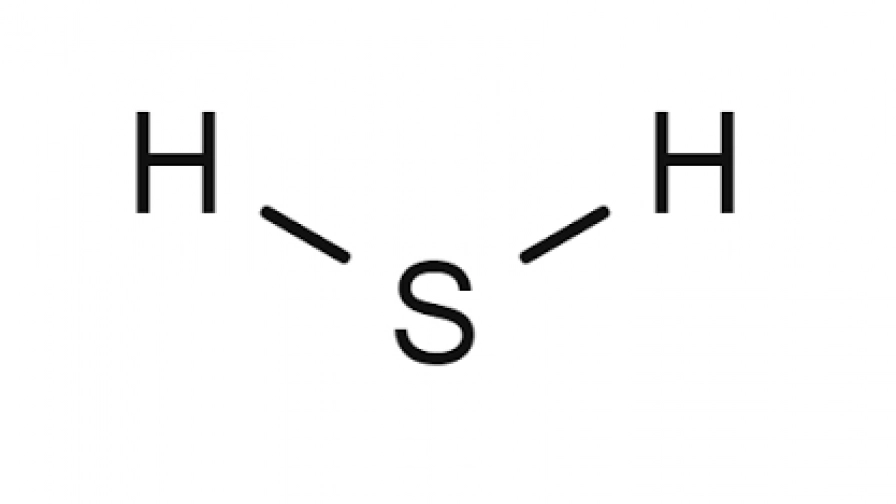
Sulphides are not undesirable compounds, and copper in the vapour path is arguable not the best way to reduce them considering the harmful nature of the resultant pot ale.
The protection of geographical indications is governed by assimilated EU regulation 2019/787.It was the incompatibility of the product specification with these regulations that formed the basis of initial objections. The amendments to The GI have not addressed these incompatibilities and the objections remain valid.
Firstly, article 3(4) of the regulations define a GI as identifying a spirit drink whose quality, reputation or other characteristic is essentially attributable to its geographical origin. Copper stills are now mostly standardised globally, and in may cases the copper stills of English Whisky distilleries are designs borrowed from Scotland and are not unique to England. Mandating copper stills, rather than defining characteristics tied to geography, exceeds the scope of article 3(4) and introduces an arbitrary barrier to entry.
Article 22 of the regulations requires that the GI product specification must be objective, verifiable and demonstrate a genuine link between specific characteristics and its geographical origin. Whilst characters can be attributed to the use of English grain and the English climate, mandating specific metals for the still has no geographical influence. Excluding non-copper distillation arbitrarily excludes modern sustainable distilling practices where there is no historical mandate.
Furthermore, article 22(e) of the regulations states that restrictions within the product specification are only permissible where they reflect an “authentic and unvarying local production method”. The use of copper stills for English Single Malt Whisky is neither authentic not unvarying. There are numerous distilleries in England producing excellent whisky without the use of copper using the techniques already outlined.
Article 27 of the regulations establishes a framework for existing producers to oppose the GI. Following Defra’s acceptance of valid reasoned statements of opposition it is reported that the GI applicants (EWG) failed to engage with objectors in a meaningful way resulting in a procedural breach.
Article 31 of the regulations prohibits GI registrations that restrict fair competition or create arbitrary technical barriers to trade. Imposing hardware-specific restrictions grants an unlawful competitive advantage to copper-equipped distilleries by excluding established English producers whose spirits otherwise fully satisfy all statutory category requirements for English Single Malt Whisky. Article 31 also prohibits specification terms that create a misleading impression regarding a product's essential character. The copper contact requirement falsely implies to consumers that copper is a defining, historical, or essential attribute of English whisky, despite the absence of any historical tradition or scientific requirement. Article 31 has been violated by distorting fair competition and misleading consumers.
The disregard of the legislation and the insistence by the EWG that Single Malt English Whisky can only be made using copper does give the impression that the GI was designed to give an advantage to member distilleries over non member distilleries. This wouldn’t be unexpected as the EWG is a trade body that exists purely to benefit its members. It has lead some in the industry to call them a “cartel”. I think the explanation is simpler.
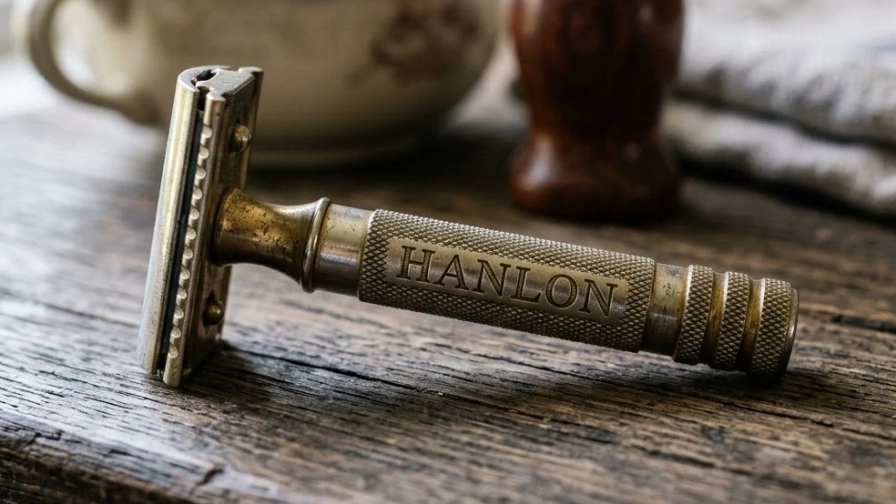
Hanlon’s razor states that you should “never attribute to malice that which can be adequately explained by stupidity”. I believe that the EWGs actions are due to a lack of understanding of modern whisky production, the modern English Whisky Industry and the relevant legislation, rather than anything sinister. Hanlon’s razor has struck.
Despite the reasoned objections and the EWGs possible procedural breach the Secretary of State chose to publish the GI regardless. The reason for supporting the EWG in such a fashion is unclear. I can only assume that Hanlon’s razor has struck twice.
A number of distilleries have appealed the publication of the English Whisky GI with the tribunal service and we will wait for the outcome. In the meantime it raises the question of whether the English Whisky Guild, that represent less than half of English Whisky distilleries, only enjoys its position at the most prominent voice in English Whisky because the other voices are fragmented.
Maybe it is time for an alternate organisation that represents the majority of English whisky distilleries rather than the minority.